
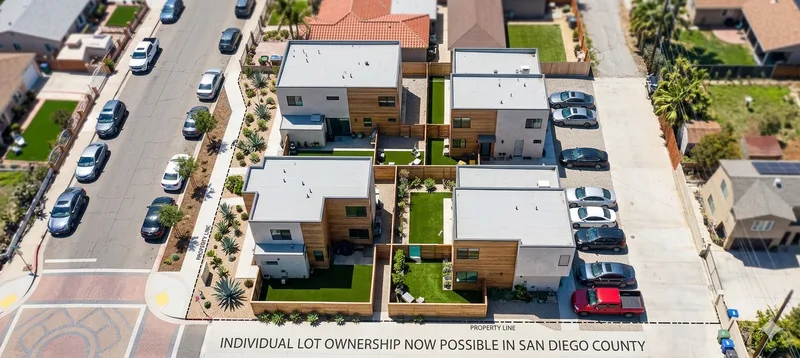
A new ordinance approved by the San Diego County Board of Supervisors in early March 2026 will allow ADUs in unincorporated areas of the county to be sold separately from the primary residence on a property. For homeowners who build an ADU with an eye toward long-term flexibility, this policy shift is worth understanding before you break ground.
What the ordinance actually does
The Board of Supervisors voted unanimously to adopt an ordinance implementing California Assembly Bill 1033, which authorizes local governments to allow ADUs to be sold as separate condominium units. The vote in early March 2026 brings unincorporated San Diego County in line with the state law, which passed in 2023 but required local jurisdictions to each adopt their own implementation rules before taking effect.
Under the ordinance, a property with both a primary home and a qualifying ADU can be structured as a two-unit condominium arrangement. Each unit gets its own deed and can be owned independently. The primary home and the ADU would essentially become two separate properties on the same parcel, each capable of being bought and sold on its own.
The county ordinance takes effect 30 days after approval. Planning staff have also been directed to return within 120 days with additional policy options, which may include giving existing ADU tenants the right of first refusal if an owner decides to sell the unit.
How the separate sale process works
Separating an ADU for individual sale requires going through a condominium subdivision process, which involves additional documentation, review, and recording steps beyond a standard ADU permit. The property would need to be mapped as a condominium project, with each unit (the main house and the ADU) assigned its own parcel and recorded separately with the county.
This is a more involved process than simply building an ADU and renting it out. It requires coordination between the property owner, an attorney, a title company, and potentially a surveyor or engineer depending on the site configuration. Homeowners considering this path should factor those additional costs and timeline into their planning from the start, not as an afterthought once construction is complete.
City of San Diego versus unincorporated county
It is important to note where this ordinance applies and where it does not. The City of San Diego adopted its own AB 1033 implementation ordinance separately, which took effect in August 2025. That means properties within San Diego city limits have operated under their own separate-sale rules for several months already.
The newly approved ordinance covers unincorporated areas of San Diego County, the parts of the region that fall outside the boundaries of any incorporated city and are governed directly by the county. If your property is in one of these areas, the March 2026 ordinance is what governs your options.
Properties in other incorporated cities throughout San Diego County, including Chula Vista, Carlsbad, and Encinitas, fall under their own municipal codes. Each of those cities will need to adopt its own AB 1033 ordinance before their residents can take advantage of separate ADU sales. Not all have done so yet.
Why this changes the math for some ADU owners
Historically, ADUs have been viewed primarily as rental assets, units that generate monthly income for the property owner while staying part of the same parcel. This ordinance opens a different possibility: building an ADU as an eventual for-sale product, effectively creating a smaller, more affordable entry-level home within an existing neighborhood.
For some homeowners, that is a meaningful change in how they think about the value and purpose of an ADU. Instead of holding it as a long-term rental, they could eventually sell the unit to a buyer, potentially a family member, a first-time buyer, or an investor. That optionality adds a new layer of financial flexibility to the ADU investment decision.
It also raises the stakes for building quality. An ADU intended for eventual separate sale needs to function as a standalone home, complete, durable, and built to a standard that holds up to resale scrutiny. That means thoughtful design, quality materials, and construction that goes beyond the minimum code requirements.
What this means for properties we work on
At Troia Construction, we work on ADU projects across multiple San Diego jurisdictions, including properties in unincorporated county areas. When clients ask us about the long-term value of an ADU, the answer now includes a new dimension: the unit you build today could, under the right conditions, become a separate sellable asset in the future.
That does not change how we approach the construction itself. We build every ADU to the same standard regardless of the intended use, but it does reinforce why the design, systems, and finishes matter from day one. An ADU built as a quality, self-contained living space will serve you better whether you rent it, sell it, or house family members in it.
If you are planning an ADU with the potential to sell it separately down the road, confirm whether your property is within the City of San Diego or unincorporated San Diego County before you start. The applicable ordinance and process differ depending on jurisdiction. Your contractor and a real estate attorney familiar with AB 1033 can help you understand what is required before you commit to a specific project structure.